


The National Eisteddfod of Wales 2026 comes to Pembrokeshire

Updated: Feb 23
The largest touring festival in Europe and one of the great festivals of the world.
Enjoy a week-long festival celebrating Welsh language and culture just 10 mins drive from Top of the Woods campsite.

In August 2026, Pembrokeshire, will host one of the most important and quietly powerful cultural events in Wales, the National Eisteddfod of Wales.
From 1–8 August 2026, the Eisteddfod will take place at Eisteddfod y Garreg Las in Llantwd, North Pembrokeshire in Wales, just around ten minutes from Top of the Woods campsite.
If you’ve heard the name but never quite known what it is, this is the perfect time to discover it and turn your visit into a summer holiday that explores the modern-day expression of Welsh language and culture, while also acknowledging its long and powerful history.

What actually is the National Eisteddfod?
The word Eisteddfod comes from two Welsh roots: eistedd, meaning to sit, and bod, meaning to be, or another way of understanding it is 'sit and coming together'.
Today, this has evolved to mean a coming together of bards, poets, singers and musicians, who compete and are judged by their peers, celebrating the Welsh language and its vibrant culture.
The festival began in 1176, when Lord Rhys ap Gruffydd invited poets and musicians from across Wales to gather at Cardigan Castle, just 15 minutes from Top of the Woods, for competitions in poetry and music.
Each year, the festival moves to a different part of Wales, creating a temporary festival village known as the Maes. It is filled with stages, tents, exhibitions, food, conversation and music.

This is not a festival built around headline acts or celebrity culture. Instead, it is shaped by participation. Choirs, poets, musicians, writers, dancers and artists of all ages come together to compete, perform, share and take part.
Much of the programme is in Welsh, but you do not need to speak the language to feel welcome. Many people come simply to listen, watch and absorb the atmosphere. It is a festival rich in Welsh hospitality, inclusive in spirit, and accessible to all.
Why the National Eisteddfod really matters
The Eisteddfod matters because it exists in direct response to loss, and from a deep pride in Welsh identity.
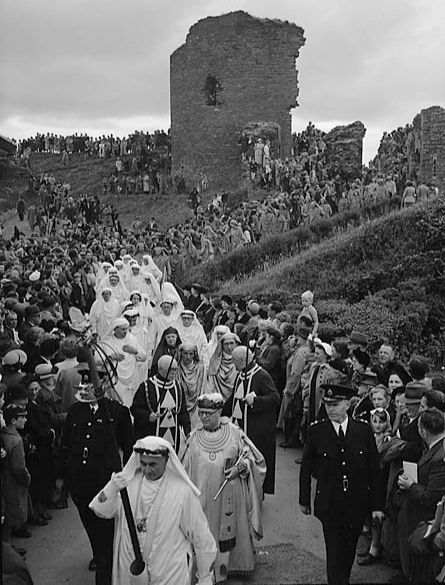
Its roots stretch back to 1176, when Lord Rhys ap Gruffydd invited poets and musicians from across Wales to gather at Cardigan Castle (15 mins from the campsite) for competitions in poetry and music. That moment marked an early recognition of the value placed on Welsh language, creativity and cultural expression.
But the modern National Eisteddfod was shaped by something far more urgent.
By the 18th and 19th centuries, the Welsh language and culture were under sustained pressure from English rule. Welsh was discouraged in schools, excluded from public life, and treated as something to be left behind.

Children were punished for speaking their own language through the Welsh Not, a shaming and deeply harmful practice that taught generations to feel frightened and embarrassed to speak their mother tongue. Welsh culture was increasingly framed as rural, backward and incompatible with progress.
The modern National Eisteddfod, formally established in 1861, was a direct response to that suppression. It created a celebrated public, national space where Welsh language, poetry, music and performance could be honoured openly and with pride.
Over more than 850 years, the festival has sent a clear and enduring message: this culture has value, depth and a future.

One of the defining features of the National Eisteddfod is that each year it is based in a different location. This allows the Eisteddfod to root itself in a new landscape every time, shaped by local Welsh communities, dialects and traditions.
Its travelling nature reinforces the idea that Welsh culture belongs to everyone, is something to be proud of, and lives in real places among real people. It honours the past, the present and the future.
This sense of continuity and pride is also expressed through the Eisteddfod’s ceremonies. The Chairing and Crowning of the Bard are not decorative traditions. They place language and poetry at the centre of public life, reclaiming space that was once denied.
So when you step onto the festival today, you are stepping into a living act of cultural expression, survival and national confidence.

What to expect: artists, performers and creativity
The Eisteddfod does not announce a line-up in the way many festivals do.
Rather than centring on a few big names, it is shaped by hundreds of Welsh artists and performers, many of whom are central to Welsh cultural life. Across the week, you can expect to encounter:

Music in all its forms
From powerful massed choirs to intimate folk sessions, traditional songs sit alongside contemporary compositions and unexpected collaborations.
Poetry, storytelling and spoken word
Poetry lies at the heart of the Eisteddfod. Ceremonies such as the Chairing and Crowning of the Bard are deeply moving to witness, even if it is your first time.

Theatre, performance and dance
From bold contemporary theatre to dance, monologues and youth performances, the programme reflects modern Welsh life alongside older stories.

Visual art, crafters and makers
Exhibitions and craft spaces showcase artists working in textiles, print, sculpture and mixed media. You can spend time wandering galleries, watching artists at work or talking with makers about their process.

What makes it all feel so alive is the mix of emerging voices and established figures.
Young performers may be stepping onto a stage for the first time, while well-known names appear as competitors or collaborators rather than distant celebrities.
You are not watching culture from the outside. You are walking right through it.
Accommodation Near the National Eisteddfod 2026 in Pembrokeshire
Why not make a holiday of the Eisteddfod Festival and stay at Top of the Woods
This is a really special kind of festival, with nothing quite like it at a national level anywhere else in the UK. Its focus on celebrating the Welsh language and culture gives the language real vibrancy and visibility, creating a true sense of cultural immersion.
The festival runs for a full week from 1–8 August, making it ideal for a longer holiday stay. Others may choose to visit for a day or two while exploring the rest of Pembrokeshire at the same time.
With Top of the Woods camping & glamping campsite is just a 10-minute drive away, we make a great base for nature-loving families, couples and friends who are looking for accommodation to enjoy the National Eisteddfod celebrations alongside the stunning Pembrokeshire and Cardigan Bay landscape.
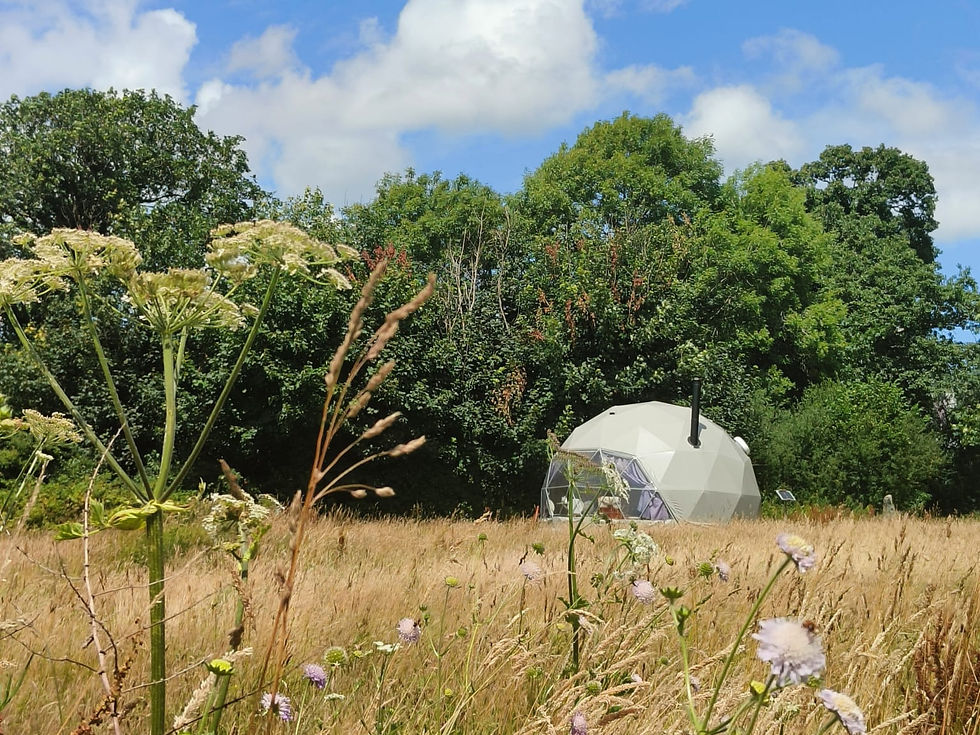
All that is left to decide is what you want to go and see and which camping or glamping accommodation you would like to stay in with us. Choose from our Safari Lodges, Nature Domes, or Pioneer Camps or Meadow Camping or if you have a campervan we also have two pitches which include ehu.
For more ideas to shape your holiday, you will also find plenty of inspiration over on Things to Do in Pembrokeshire.
Who tends to love the Eisteddfod
The Eisteddfod attracts a wonderfully mixed crowd, including:
Welsh speakers and Welsh learners
Artists, performers, competitors and volunteers
Friends and family supporting someone taking part
Visitors from across the UK curious about Welsh culture and island traditions
People returning to Wales to reconnect with language, heritage or place
The Eisteddfod welcomes all ages and backgrounds. For those who want full, lively days on the Maes followed by campfire evenings, woodland walks and space to breathe, basing yourself in nature offers the best of both worlds.
Planning ahead for August 2026
August is peak season in Pembrokeshire, and the Eisteddfod will add to that demand.
Accommodation close to the Maes will book early, so many visitors choose to stay a little further out and travel in for the day.
This gives you the best of both worlds:
Easy access to the Eisteddfod
Space to rest and reset in the evenings
Time to experience Pembrokeshire beyond the festival
Frequently asked questions about the National Eisteddfod 2026
1) Is the National Eisteddfod open to non Welsh speakers?
Yes. While much of the programme is in Welsh, the Eisteddfod is welcoming and accessible to everyone.
2) When is the National Eisteddfod in Pembrokeshire?
It takes place from 1–8 August 2026 at Eisteddfod y Garreg Las in North Pembrokeshire.
3) How far is the Eisteddfod from Top of the Woods?
The Maes is around ten minutes away in the car, making it easy to dip in and out while staying somewhere peaceful and surrounded by nature.
4) Can you make a holiday around the Eisteddfod?
Yes. Many visitors combine time at the Eisteddfod with exploring Pembrokeshire’s coast, woods and countryside, turning their visit into a longer, more relaxed summer break.
If you love Wales, its language, culture and landscapes, why not make a holiday of the Eisteddfod and stay with us at Top of the Woods.

Top of the Woods Provides the Best Eco Luxury Glamping & Camping Nature Retreat Holidays in Pembrokeshire and Cardigan Bay in Wales, UK. Sustainable Staycations. Near Beaches. Nature. Woodlands. Dog Friendly Breaks.


